Yarn decision hub
Choose yarn with a repeatable process
Begin with the project requirements, read the whole label, compare the fabric each candidate is likely to make, and prove the choice with a washed swatch. A yarn-weight number or suggested tool size can narrow the search, but neither decides the final match.
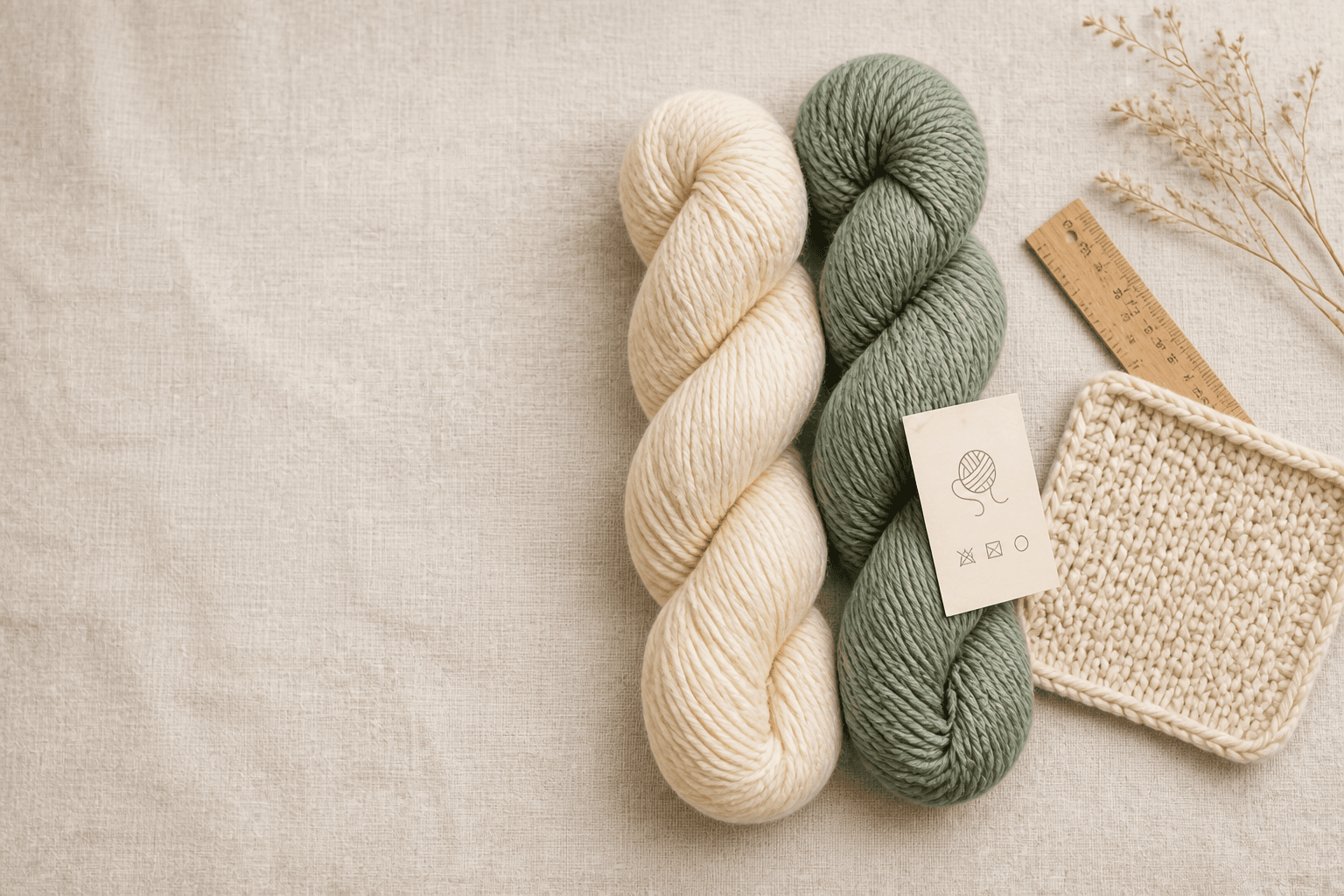
Step 1
Write a project brief before shopping
The best comparison starts with the object, not with a yarn you hope will work. Read the full pattern and collect its constraints in one place. If the pattern leaves an important requirement unstated, decide what the finished object needs and record that assumption.

- The pattern’s stated yarn weight and exact gauge
- The stitch pattern used for the gauge measurement
- The required total length in yards or metres
- The size or version you intend to make
- The intended fit, drape, warmth, texture, and durability
- The washing and drying routine the finished object must tolerate
These notes prevent a common failure: selecting a pleasant yarn and discovering later that it cannot make the required fabric, cannot be sourced in sufficient quantity, or demands impractical care.
Step 2
Capture the label facts before comparing yarn
Keep or photograph the band and record the yarn name, color, dye lot, fiber content, origin, net weight, length, category, tool and gauge guidance, and care. Each field answers a different question. In particular, package mass is not the yarn-weight category, and two equally heavy skeins can contain different lengths.
The band is evidence about the yarn, not proof that it suits a project. Use the field-by-field yarn-label guide to decode the record and distinguish identity fields from project guidance.
Step 3
Compare candidates by function
Put the project brief beside the label record. Remove candidates that fail hard constraints such as care, quantity, recipient needs, or an unsuitable finished fabric. Then use weight and fiber as filters and a washed swatch as the final project check.
The complete yarn-substitution workflow connects the weight, fiber, and gauge decisions. A replacement succeeds only when it meets the specification and makes a useful fabric; matching one label number is not enough.
Step 4
Calculate skeins from total length
Work in one unit, divide the project’s required length by the candidate length per skein, and round up to a whole package. Calculate separate colors separately and do not substitute grams for yards or metres.
Use the yarn-quantity worksheet for unit conversions, multi-color calculations, older ball-count patterns, modifications, swatch use, and a clearly recorded allowance. It does not invent one percentage that fits every project.
Decision point
Know when to reject a yarn
Stop when the washed sample cannot reach both the requested gauge and a useful fabric, when the yarn changes in an unacceptable way, or when the required quantity cannot be sourced consistently.
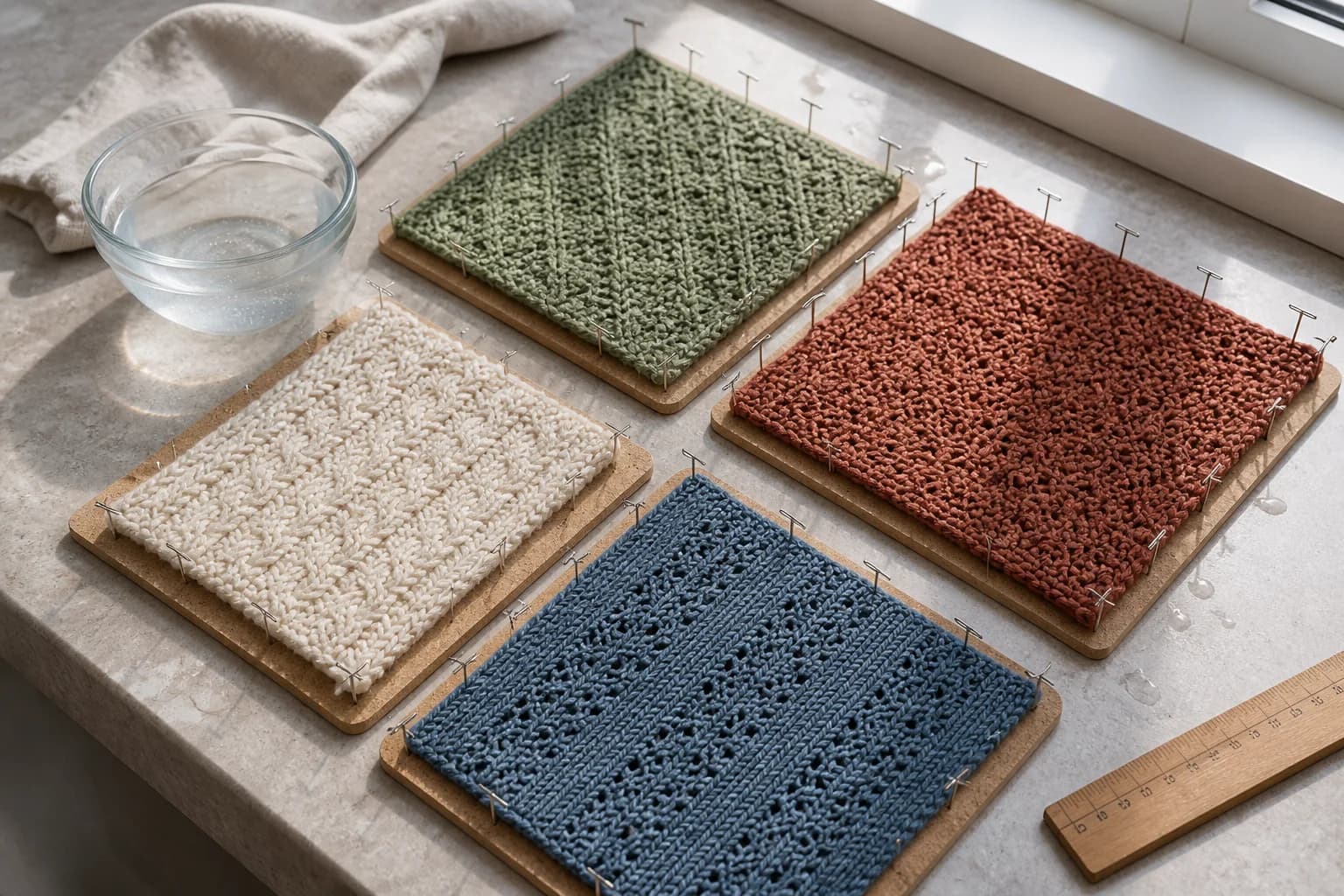
Also stop when the care routine conflicts with the recipient’s needs, the yarn feels wrong against the intended skin area, or the finished fabric would be too heavy for its construction.
Rejecting a candidate is useful information. Keep the label and swatch notes so the next comparison starts with evidence rather than memory.
Continue
Use the decision in a project
Preview planned colour pooling from measured colour-run stitch counts.
Convert needle and hook sizes, compare the eight yarn weight profiles, or estimate a blanket from your measured swatch.