Choose the finished fabric
Choose yarn fiber for the project you will use
Begin with the object: how it should feel, hang, recover, wear, and be cleaned. Fiber content helps predict those qualities, but yarn construction and the washed swatch reveal the actual fabric.
Decision first
Describe the job before naming a fiber
“Soft,” “natural,” and “washable” are incomplete specifications. Softness is personal, natural fibers behave differently from one another, and a care label may impose conditions on any fiber. Turn the project into observable requirements instead.
- Will the object touch sensitive skin, be worn over another layer, or stay away from the body?
- Should the fabric hold a defined shape, stretch and recover, or fall with fluid drape?
- Will it face abrasion at heels, elbows, bag bottoms, or other high-wear areas?
- Does the user need machine washing, fast drying, or another practical care method?
- Will the wet and finished weight be comfortable at the project’s full size?
- Do cables, lace, colorwork, or textured stitches need clear visual definition?
Rank the answers. A baby blanket that must survive routine machine washing has a different priority order from a structured market bag or a light lace shawl. If a requirement truly cannot move, test it before judging color, price, or the appeal of the skein.
Comparison
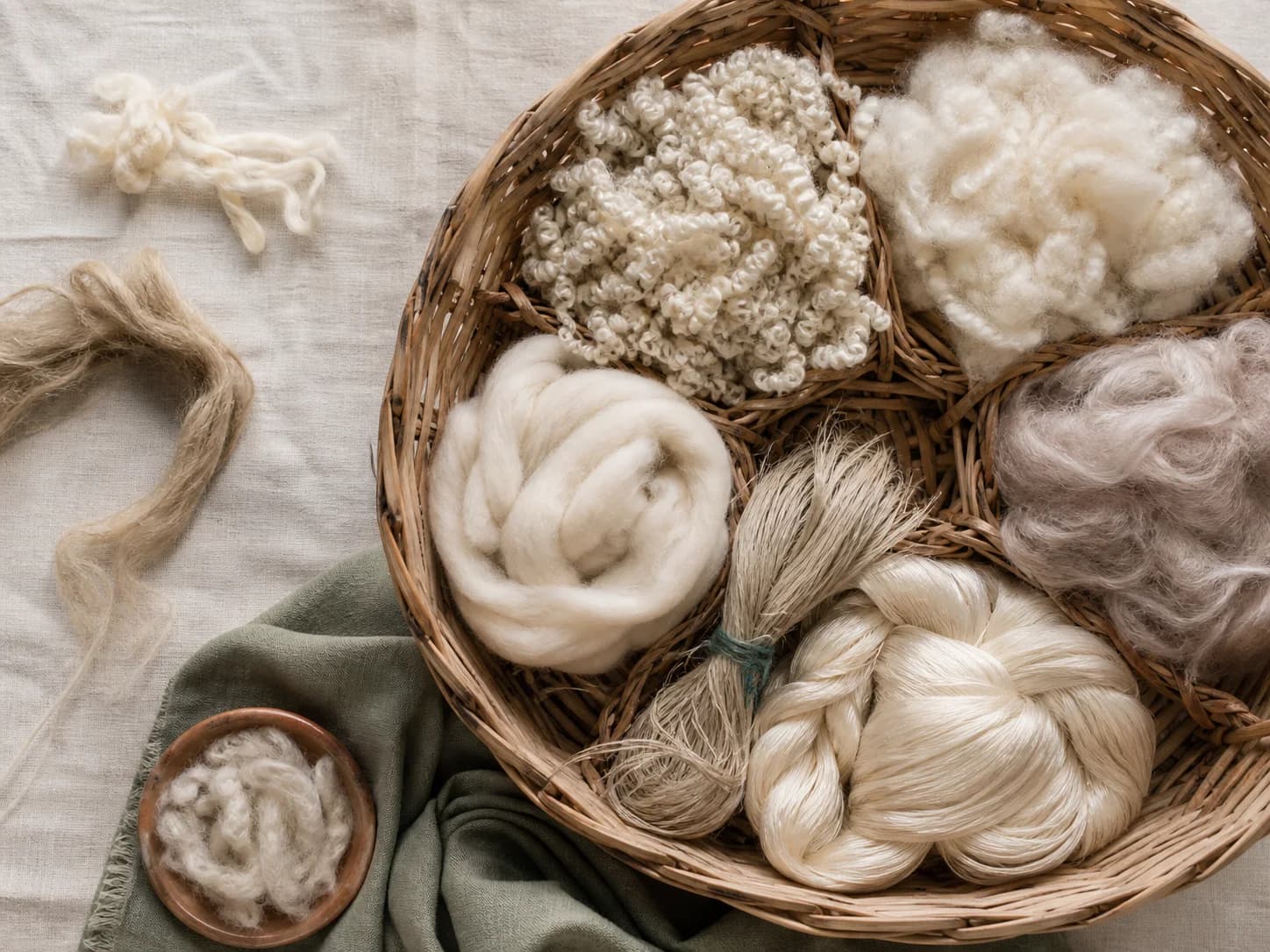
Fiber families and their common tendencies
The words “often” and “can” matter in this table. Species or plant source, processing, spin, ply, surface treatment, blend, and gauge can change the result. Use the row to form questions, not to skip a swatch.
| Fiber family | Common tendencies | Possible uses | Check in this yarn |
|---|---|---|---|
| Wool | Often warm and resilient, with useful elasticity and recovery | Garments, hats, mittens, colorwork, and projects that need shape | Skin feel, washing method, felting potential, and the specific wool or blend |
| Alpaca and other fine animal fibers | Often warm, soft, and drapey; some yarns have less spring than wool | Scarves, shawls, soft layers, and blends that need warmth or drape | Recovery, shedding, weight, abrasion, care, and recipient sensitivity |
| Cotton | Often absorbent, breathable, smooth, and less elastic than wool | Warm-weather garments, cloths, home pieces, and stitch definition | Finished weight, edge stretch, drying time, colorfastness, and care |
| Linen, hemp, and similar plant fibers | Often firm or crisp while working, with fluid drape after use and washing | Summer layers, bags, table pieces, and fabric where structure is useful | Hand feel, join security, recovery, washing change, and row gauge |
| Silk | Often smooth, strong, lustrous, and able to add drape | Special garments, shawls, and blends where sheen or fluidity matters | Care, cost, color behavior, snagging, and whether the fabric holds shape |
| Acrylic, polyester, and polyamide | A wide family that can add durability, easy care, texture, or elasticity | Everyday gifts, blankets, socks in blends, toys, and washable projects | Heat sensitivity, feel, breathability, static, pilling, and exact care limits |
| Blends | Combine properties in proportions that must be read as a whole | Projects needing a balance such as wool recovery plus added durability | All percentages, construction, care, and the washed fabric—not one headline fiber |
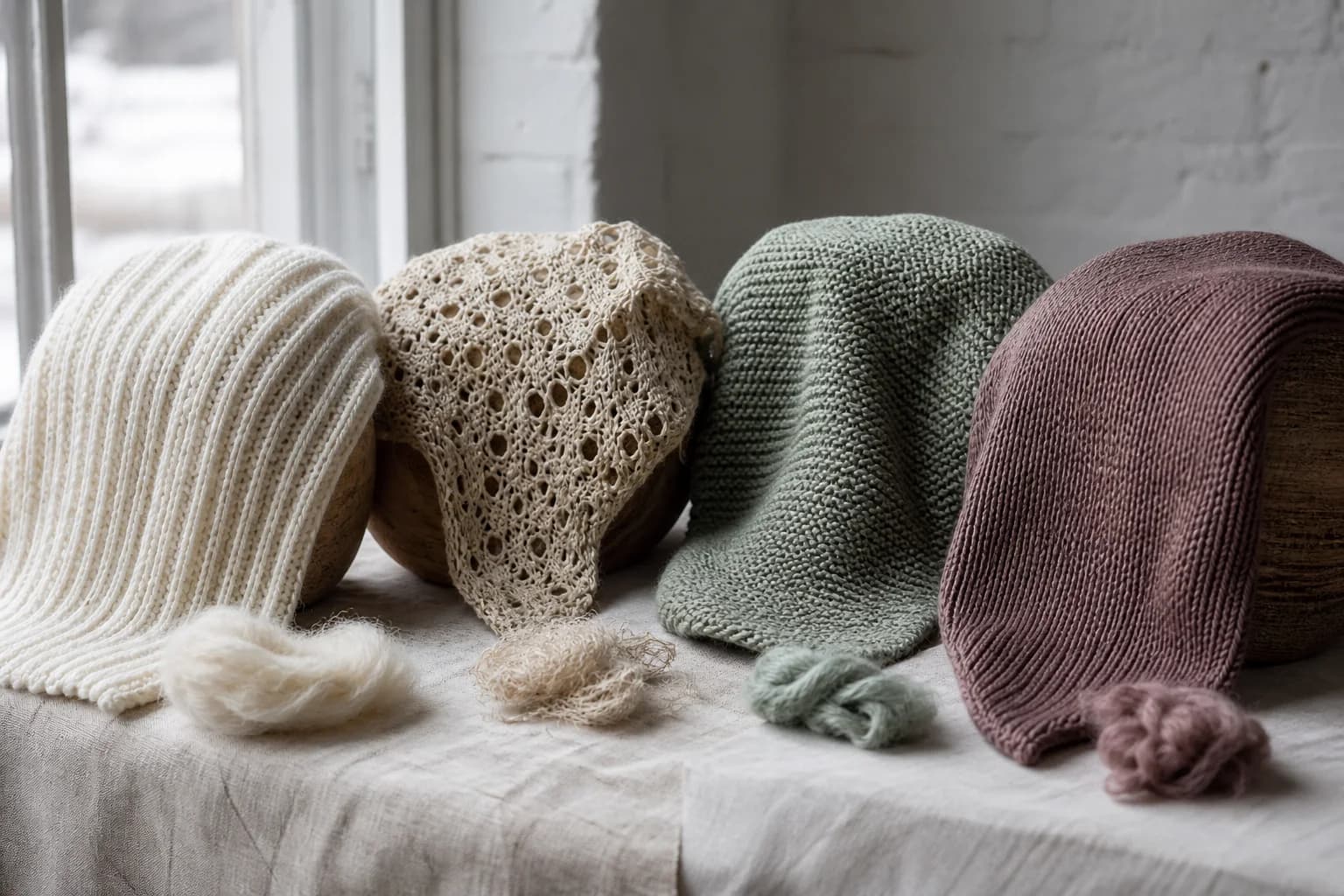
Yarn construction can outweigh a simple fiber comparison. A brushed yarn and a smooth multi-ply yarn made from similar fiber may show stitch patterns, resist abrasion, and shed in very different ways. Compare actual yarns at the project gauge rather than choosing from fiber names alone.
Percentages
Read a blend as one engineered material
Record every fibre and percentage in the order printed on the label. That order tells you composition; it does not calculate warmth, durability, or feel for you.
A smaller percentage can still have a noticeable purpose. A sock yarn may pair an animal fiber with polyamide for wear; a plant blend may add another fiber for recovery; a wool blend may add alpaca or silk for a different surface and drape. The effect depends on construction as well as percentage, so avoid claims such as “mostly wool means it behaves exactly like pure wool.”
Use cases
Translate a project into fiber checks
A fitted garment
Prioritize washed gauge, recovery, finished weight, next-to-skin feel, and realistic care. Hang the dry swatch for a measured period, let it rest, and compare dimensions before and after. A beautiful fabric that keeps lengthening may not suit shoulders or sleeves without design changes.
Socks or high-wear pieces
Examine abrasion, elasticity, recovery, moisture comfort, and laundering. Rub part of the washed swatch against itself and watch the surface. Check that cuffs and edges return after stretching. A soft hand alone does not establish long-term wear.
A warm-weather top
Check breathability, opacity, drape, wet weight, drying, and edge recovery. Plant fibers are frequent candidates, but an open stitch pattern or heavy full-size fabric can change the experience. Measure row gauge after washing because length matters.
A frequently used blanket
Put care, abrasion, shedding, color behavior, warmth, and total finished weight ahead of novelty. Test the exact washing and drying method the household can maintain. Keep the band so the recipient receives accurate instructions.
A bag or structured home piece
Favor the fabric's resistance to stretching and abrasion. Load the swatch or a larger sample, then measure it after rest. Handles, base, lining, and seams may need their own reinforcement even when the main fabric looks firm.
Colorwork or textured stitches
Make the actual motif. Look for clear stitch shapes, manageable floats, compatible care, and colors that remain distinct after washing. Similar fiber names do not guarantee that two yarns bloom or reflect light in the same way.
Real-world use
Choose for the recipient and their care routine
Ask the recipient about skin comfort and laundry before buying. Do not diagnose a reaction from a fiber name, and do not promise that a yarn is allergy-safe. If sensitivity is a concern, let the recipient handle a washed sample or choose a familiar material they already tolerate.
Follow the yarn band's complete care wording. Fiber family alone does not authorize machine washing, tumble drying, ironing, bleach, or heat blocking. When combining yarns, use a process safe for every component and test the full combination.
Gifts need written care information. Save a band or make a card with the yarn name, fiber percentages, and the exact wash and dry method you tested. If the recipient cannot reasonably use that method, select a different yarn before starting.
For a handmade project, the yarn maker's instructions are the starting point and a washed swatch checks the fabric you made.
Evidence in hand
Test more than stitch count
Make the sample large enough to include the main stitch pattern and an undistorted center. Wash and dry it exactly as planned. Label it so you do not lose the tool size or yarn identity, then assess it in the conditions where the project will be used.
- Measure stitch and row gauge before washing.
- Wash, rinse, and dry according to the chosen care method.
- Measure again and calculate the dimensional change.
- Hold it against skin or clothing as the object will be worn.
- Stretch it gently, release it, and observe how well it returns.
- Fold and hang it to judge body, drape, and finished weight.
- Rub a test area to inspect fuzzing, pilling, or color transfer.
- Keep the sample and record rather than relying on memory.
A swatch cannot perfectly reproduce months of wear, but it can reject a poor match early. If the fabric fails a non-negotiable requirement, change the yarn, construction, or project. Do not buy more solely because the gauge number matches.
Rubbing, hanging, and stretching a home swatch help compare candidates before committing the full quantity. Long-term wear also depends on use, care, and construction.
Common questions
Fiber-choice questions answered
Continue